In pharmaceutical operations, compliance issues rarely begin with major failures.
More often, they start with small gaps that quietly build over time.
An outdated chemical document.
A missing revision update.
An SDS file stored in the wrong system.
Different departments using different versions of the same record.
Individually, these may seem manageable. But in highly regulated pharma environments, even small inconsistencies can create operational delays, audit risks, and safety concerns.
That’s one of the biggest reasons why SDS compliance India is becoming a growing focus area for pharmaceutical operations leaders.
Today, Safety Data Sheet management is no longer viewed as just a documentation requirement handled by compliance teams. It now plays a direct role in operational efficiency, workplace safety, audit readiness, and organizational accountability.
As pharma companies continue scaling operations, the need for structured and accessible compliance systems is becoming impossible to ignore.
Why SDS Compliance Matters More Than Ever in Pharma
Pharmaceutical organizations handle a wide range of chemicals across:
- Manufacturing units
- R&D laboratories
- Testing facilities
- Packaging departments
- Warehouses and storage areas
Every chemical used within these environments requires accurate and updated safety documentation.
A Safety Data Sheet (SDS) contains critical information such as:
- Hazard identification
- Handling procedures
- Storage guidelines
- First-aid measures
- Disposal instructions
- Emergency response information
In highly regulated industries like pharma and healthcare, this documentation is essential not only for safety but also for operational continuity and regulatory preparedness.
And as regulatory expectations continue to evolve, organizations are under increasing pressure to improve how this information is managed and maintained.
The Real Challenge Isn’t Documentation — It’s Visibility
Most pharmaceutical companies already maintain SDS records in some form.
The real challenge is ensuring that the information is:
- Updated
- Accessible
- Standardized
- Easy to retrieve across departments
In many organizations, SDS records are still scattered across:
- Shared drives
- Email threads
- Department folders
- Physical files
- Legacy systems
Over time, this creates operational silos and documentation inconsistencies.
During audits or inspections, teams often struggle with questions like:
- Which SDS version is the latest?
- Are all facilities using the same record?
- Can the document be retrieved immediately?
- Has the chemical information been updated recently?
When answers are delayed, operational pressure increases quickly.
Why Manual SDS Management Creates Operational Risks
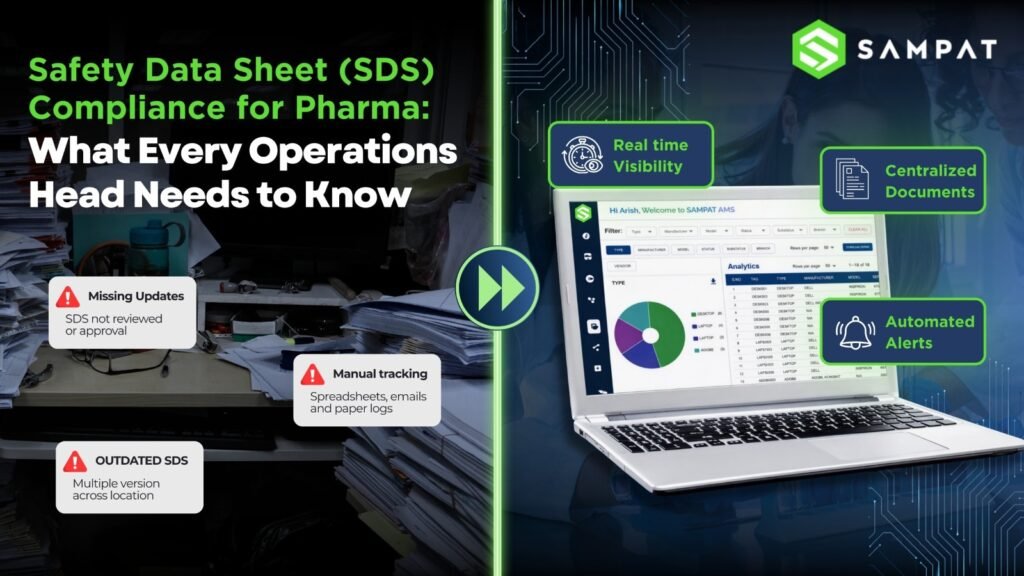
As pharmaceutical operations expand, manual compliance processes become increasingly difficult to manage.
What may work for a single facility often becomes unsustainable across multiple departments or locations.
Some of the most common operational challenges include:
Version Conflicts
Different departments may unknowingly maintain separate versions of the same SDS record, increasing the risk of outdated information being used.
Delayed Audit Preparation
During inspections, operations and compliance teams are expected to produce accurate records quickly.
When documentation is fragmented, teams spend valuable time searching for files instead of focusing on audit readiness.
Increased Administrative Workload
Compliance teams often dedicate hours to:
- Verifying records
- Updating spreadsheets
- Tracking revisions
- Coordinating between departments
This reduces efficiency and increases dependency on manual follow-ups.
Limited Cross-Department Visibility
Without centralized visibility, it becomes difficult for operations leaders to monitor compliance consistency across facilities and teams.
Why Pharma Companies Are Moving Toward Digital SDS Systems
As compliance requirements grow more complex, pharmaceutical organizations are shifting toward structured digital systems to simplify documentation management.
Modern safety data sheet software solutions help organizations centralize records, standardize workflows, and improve operational visibility.
Instead of managing SDS documentation through disconnected systems, teams can access information through a unified environment.
This creates several operational advantages:
- Faster document retrieval
- Better version control
- Improved traceability
- Reduced manual effort
- More consistent compliance processes
More importantly, digital systems allow operations teams to move from reactive compliance management toward proactive operational governance.
What Operations Heads Should Expect from Safety Data Sheet Software
Today’s pharma organizations require more than just document storage.
The right safety data sheet software should support both compliance management and operational efficiency.
Key capabilities typically include:
Centralized Documentation Access
A single repository ensures all teams work with the same updated information, reducing duplication and confusion.
Automated Tracking and Notifications
Automated alerts help teams stay informed about:
- Document updates
- Expired records
- Missing documentation
- Regulatory changes
This significantly reduces the risk of oversight.
Faster Audit Readiness
Quick access to records helps simplify audits and inspections while reducing operational stress during compliance reviews.
Multi-Location Visibility
Organizations operating across multiple facilities need centralized oversight into compliance status and documentation consistency.
Better Cross-Functional Coordination
SDS management often involves:
- EHS teams
- Quality assurance
- Procurement
- Manufacturing
- Warehouse operations
Structured systems improve collaboration while reducing communication gaps between teams.
The Shift Toward Smarter Compliance Operations
Forward-looking pharmaceutical companies are beginning to treat compliance as part of broader operational strategy rather than a separate administrative task.
This shift is important because compliance systems now contribute directly to:
- Operational visibility
- Risk reduction
- Faster decision-making
- Process standardization
- Long-term scalability
Organizations that digitize compliance-related workflows gain stronger control over day-to-day operations while improving audit preparedness.
How Platforms Like SAMPAT Support Operational Visibility
For organizations operating in compliance-heavy environments, disconnected workflows often create inefficiencies across teams.
Platforms like SAMPAT help organizations centralize operational processes, improve documentation visibility, and reduce dependency on fragmented systems.
By bringing workflows, records, and operational activities into a more structured ecosystem, organizations can improve coordination across departments while maintaining better control over compliance-related processes.
For pharma and healthcare organizations, this becomes increasingly valuable as operational complexity and regulatory expectations continue to grow.
Why SDS Compliance in India Will Continue to Evolve
Across India’s pharmaceutical and healthcare sectors, compliance standards are becoming more structured and data-driven.
Organizations are now expected to demonstrate:
- Faster traceability
- Accurate documentation
- Better safety governance
- Standardized operational processes
As a result, SDS compliance India is no longer just a regulatory checkbox. It is becoming a key part of operational maturity and organizational readiness.
Companies that continue relying heavily on manual documentation systems may eventually face increasing operational challenges as compliance expectations evolve further.
Meanwhile, organizations investing in digital operational infrastructure are building stronger long-term resilience.
Moving Toward Smarter Compliance Operations
In pharmaceutical operations, effective SDS management is no longer just about storing documents.
It is about creating systems that support:
- Operational efficiency
- Workplace safety
- Audit readiness
- Process visibility
- Organizational accountability
As compliance complexity continues increasing, manual systems create limitations that are difficult to scale.
Modern safety data sheet software solutions help organizations improve documentation management while enabling more structured operational control.
And for organizations looking to simplify workflows and improve visibility across compliance-heavy operations, platforms like SAMPAT are helping teams move toward more connected and scalable operational processes.