
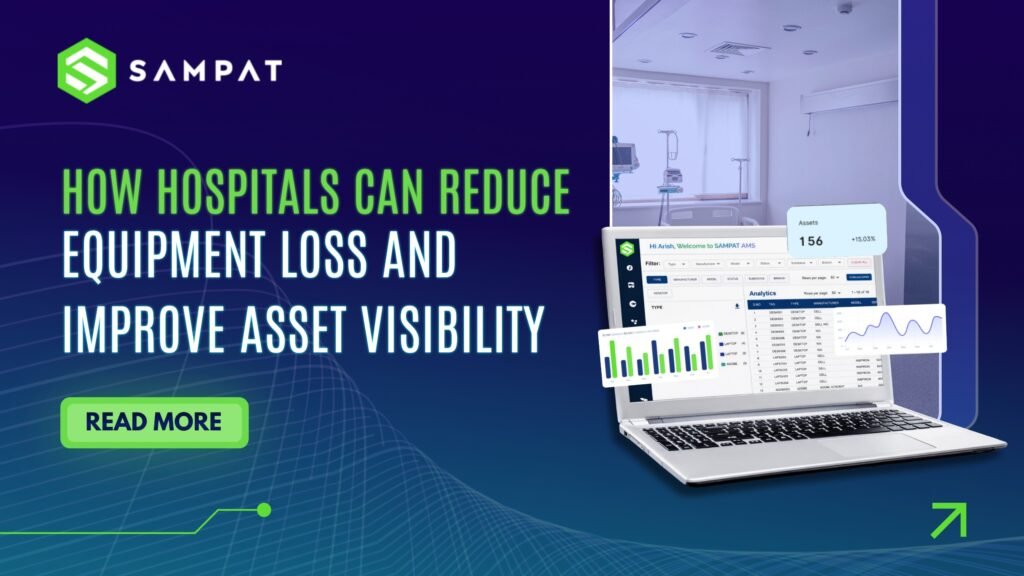
How Hospitals Can Reduce Equipment Loss and Improve Asset Visibility
A nurse urgently needs an infusion pump for a patient.
The equipment is listed in the inventory system, but nobody knows where it is.
Calls are made to multiple departments. Staff begin searching storage rooms. Another team believes it was moved last week. Someone else thinks it may have been sent for maintenance.
After several minutes of searching, a replacement device is arranged.
While the patient eventually receives care, valuable time has been lost.
This situation is more common than many healthcare organizations realize.
In most hospitals, equipment loss does not occur because assets are stolen or permanently missing. More often, assets become misplaced, transferred without documentation, left unused in departments, or lost within complex operational environments.
The result is the same: reduced efficiency, unnecessary purchases, operational delays, and frustration for both clinical and administrative teams.
The challenge is not always a shortage of equipment.
It is often a shortage of visibility.
This is why Hospital Asset Management Software has become increasingly important for modern healthcare organizations seeking better control over medical equipment, operational efficiency, and patient care outcomes.
The Hidden Cost of Equipment Loss
When hospital leaders think about equipment loss, replacement costs are usually the first concern.
However, the actual impact extends much further.
Every misplaced asset creates a chain reaction across hospital operations.
Clinical teams spend time searching instead of providing care.
Maintenance teams struggle to locate equipment scheduled for servicing.
Procurement teams purchase assets that may already exist somewhere within the organization.
Department managers make decisions without complete visibility into available resources.
Over time, these inefficiencies create significant operational and financial challenges.
Common consequences include:
- Delays in patient care
- Increased equipment purchases
- Poor asset utilization
- Maintenance scheduling challenges
- Inventory inaccuracies
- Compliance and audit risks
- Reduced workforce productivity
For large hospitals managing thousands of assets across multiple departments and locations, even small visibility gaps can result in substantial operational losses.
The Real Problem: Hospitals Often Own More Equipment Than They Think
One of the most surprising discoveries healthcare organizations make during asset audits is that they often possess sufficient equipment but lack visibility into where those assets are located.
A portable monitor may sit unused in one department while another department requests additional units.
Wheelchairs may be spread across multiple locations without accurate tracking.
Diagnostic devices may remain underutilized simply because staff are unaware of their availability.
Without proper Healthcare Asset Tracking, organizations cannot fully understand:
- Where assets are located
- Who is using them
- How frequently they are utilized
- Whether maintenance is due
- Which assets are under warranty
- When equipment was last moved
As healthcare facilities continue expanding, manual asset management processes become increasingly difficult to maintain.
Spreadsheets, paper records, and disconnected systems simply cannot provide the visibility required in modern healthcare environments.
Why Traditional Asset Tracking Methods No Longer Work
Healthcare operations have become significantly more complex over the last decade.
Assets move constantly between:
- wards
- laboratories
- diagnostic centers
- operating theatres
- emergency departments
- satellite facilities
In many organizations, these movements are recorded manually—or not recorded at all.
As a result, asset information quickly becomes outdated.
A maintenance record may exist in one system.
Location details may be stored elsewhere.
Warranty information may reside within procurement documents.
No single source provides a complete picture.
This fragmented approach creates blind spots that make equipment loss almost inevitable.
Modern hospitals require a centralized and automated approach that delivers real-time visibility into asset movement and utilization.
From Asset Tracking to Asset Intelligence
The most effective healthcare organizations no longer view asset management as an inventory exercise.
Instead, they view it as an operational intelligence function.
Modern Hospital Asset Management Software provides far more than simple tracking capabilities.
It helps organizations understand:
- Asset utilization trends
- Equipment availability
- Maintenance performance
- Lifecycle costs
- Asset movement patterns
- Operational bottlenecks
This shift enables healthcare leaders to move from reactive asset management to proactive decision-making.
Rather than searching for missing equipment, teams can identify potential issues before they disrupt operations.
How Better Asset Visibility Improves Patient Care
Asset management is often viewed as an operational process.
In reality, it directly impacts patient outcomes.
When critical equipment is available exactly when needed:
- Treatment delays are reduced
- Clinical workflows improve
- Staff productivity increases
- Patient experiences improve
- Resource allocation becomes more effective
For example, a nurse should never have to spend valuable time locating a wheelchair, infusion pump, or patient monitor.
Every minute spent searching is time taken away from patient care.
Improved visibility allows healthcare professionals to focus on what matters most—delivering quality care.
The Role of Automation in Healthcare Asset Tracking
Manual tracking processes leave too much room for error.
Automation has become essential for healthcare organizations seeking accurate and reliable asset visibility.
Technologies such as:
- QR Codes
- Barcodes
- RFID Tracking
- Automated Asset Discovery
- Location Tracking
enable hospitals to maintain accurate asset records with minimal manual intervention.
Automated tracking helps organizations:
- Locate assets faster
- Reduce missing equipment incidents
- Improve inventory accuracy
- Streamline audits
- Monitor asset movement
- Enhance accountability
The result is greater operational efficiency and significantly lower risk of equipment loss.
What Healthcare Organizations Should Look for in an Asset Management Solution
Not all asset management platforms are built for healthcare environments.
Hospitals require solutions capable of managing complex asset lifecycles while supporting compliance, maintenance, and operational visibility.
An effective solution should provide:
Complete Asset Lifecycle Management
Track assets from procurement to disposal while maintaining a complete history of ownership, movement, maintenance, and utilization.
Preventive Maintenance Management
Ensure equipment remains operational through scheduled maintenance and service planning.
Warranty and AMC Tracking
Avoid unnecessary repair expenses while ensuring assets remain properly covered.
Asset Movement Visibility
Track transfers across departments and locations without losing accountability.
Audit and Compliance Readiness
Maintain accurate records for inspections, audits, and regulatory requirements.
Real-Time Asset Intelligence
Provide meaningful insights that support better operational decisions.
How SAMPAT Helps Hospitals Improve Asset Visibility
As healthcare organizations continue modernizing operations, the need for intelligent asset management is growing rapidly.
SAMPAT Asset Management helps hospitals move beyond manual asset tracking by providing a centralized platform for managing assets throughout their lifecycle.
With capabilities such as:
- Asset Lifecycle Management
- QR Code, Barcode, and RFID Integration
- Automated Asset Tracking
- Missing Asset Intelligence
- Preventive Maintenance Management
- AMC and Warranty Tracking
- Depreciation Management
- Asset Movement Tracking
- Real-Time Reporting and Analytics
SAMPAT helps healthcare organizations gain greater visibility into their assets while reducing operational inefficiencies.
Rather than reacting to missing equipment after problems arise, hospitals can proactively manage assets across departments, facilities, and locations.
This approach improves accountability, optimizes asset utilization, and supports better operational planning.
Looking Beyond Equipment Tracking
The future of healthcare asset management is not simply about knowing where equipment is located.
It is about understanding how assets contribute to operational performance.
Hospitals that embrace visibility-driven asset management gain advantages far beyond inventory control.
They improve:
- Resource utilization
- Maintenance planning
- Procurement decisions
- Compliance management
- Staff productivity
- Patient care efficiency
Most importantly, they create healthcare environments where critical equipment is available when and where it is needed.
Conclusion
Equipment loss is rarely just an inventory issue.
It is a visibility issue.
Hospitals that lack accurate insight into asset location, utilization, and lifecycle status often face unnecessary costs, operational inefficiencies, and avoidable disruptions to patient care.
By implementing modern Hospital Asset Management Software and adopting a proactive approach to Healthcare Asset Tracking and Medical Equipment Management, healthcare organizations can significantly reduce equipment loss while improving operational performance.
Because in healthcare, having the right equipment is important.
Knowing exactly where it is—and ensuring it is available when needed—is even more valuable.